
The Mistake Almost Everyone Makes First
The second a garage door starts grinding or banging, most homeowners reach for a can of WD-40 and spray every moving part they can see. It's tempting because it's cheap, it's already under the sink, and the hissing sound of the spray feels like progress. The problem is that WD-40 is a solvent and cleaner, not a long-term lubricant. In a climate like ours, where humidity, pollen, and afternoon dust blow around constantly, that thin coating attracts grit almost immediately. Rollers and hinges that were quiet for a day or two go right back to grinding within weeks, except now they're also gummed up with debris. The other common mistake is assuming a loud opener means the whole unit is dying and needs replacing. Most of the time, the noise is coming from the door hardware, not the motor. Work through the cheap fixes in order before you spend money on a new opener.
Tools You'll Need
- Socket wrench set and screwdriver
- White lithium grease or a silicone-based garage door lubricant (not WD-40, not motor oil)
- Replacement nylon rollers (if yours are metal and worn)
- Rubber anti-vibration pads or isolators (sized for your opener bracket)
- Flashlight for inspecting the track, chain, and springs
- Step ladder
Step-by-Step: Quieting Your Opener
1. Figure out what kind of noise you're actually hearing
A rattle usually means loose hardware. A grinding or squeaking sound points to dry or worn rollers. A loud bang when the door starts or stops often means chain slack or a loose trolley. A deep hum or clunk from the springs can mean rust or a spring on its way out. Run the door up and down once, stand close, and note where the noise is coming from before you touch anything.
2. Tighten every bolt, bracket, and hinge
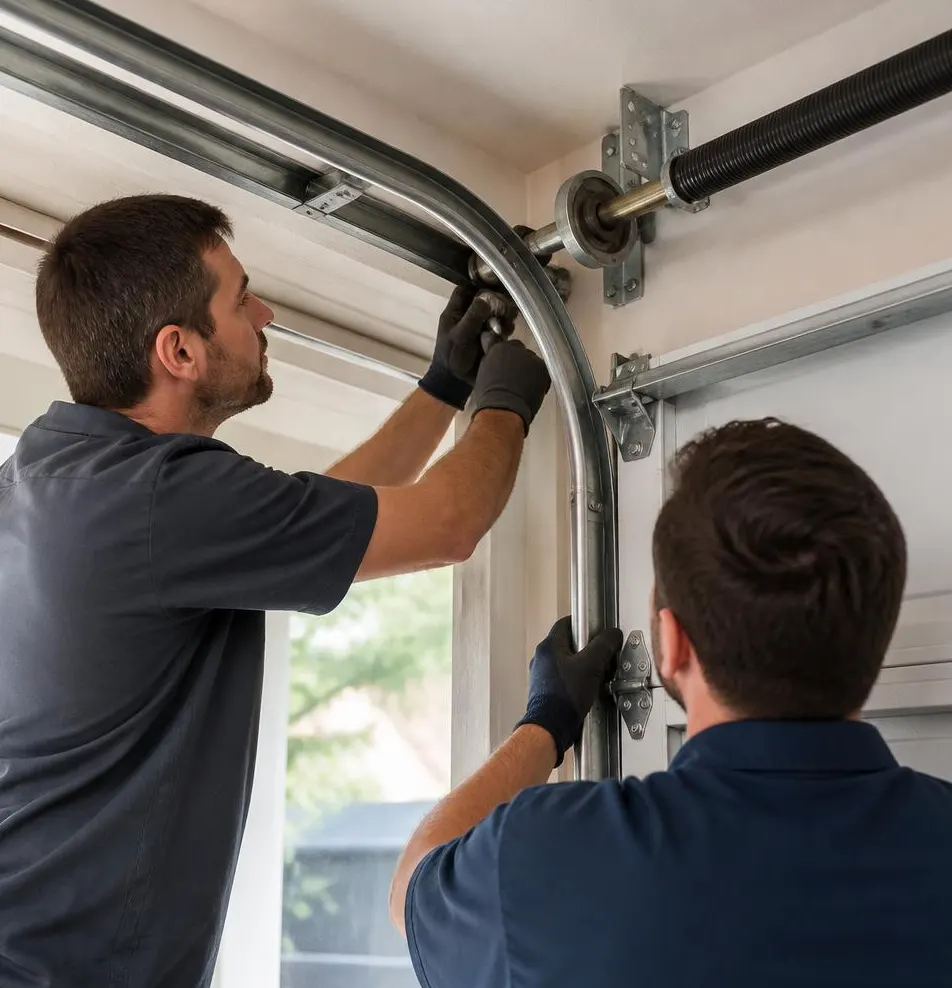
Garage doors vibrate every time they cycle, and in homes near the coast that vibration loosens hardware faster because salt air works its way into threads and corrodes them slightly over time. Go down the track with a socket wrench and snug up every bolt on the brackets, hinges, and the opener rail mount. This alone fixes a surprising number of rattles and costs nothing.
3. Lubricate the right parts, and skip the WD-40
Use white lithium grease or a silicone garage door lubricant on the rollers, hinges, and the springs themselves. For a chain-drive opener, use a light lubricant made for chains on the rail, not grease, which can gum up and attract dust in our humidity. Wipe off excess so it doesn't drip onto the floor or attract more grit from the next storm's dust.
4. Replace worn or metal rollers
If your rollers are metal and have been in place for years, they're likely the source of a grinding sound no amount of lubricant will fix. Nylon rollers run much quieter and hold up well against the swelling and humidity swings common here, where wood-panel doors in particular expand slightly during wet season and contract in drier stretches. Swapping rollers is a straightforward DIY job: remove the hinge bolt, slide the old roller out, slide the new one in, and rebolt. Do one hinge at a time so the door stays supported.
5. Adjust chain tension or inspect belt wear
A chain-drive opener that bangs loudly when starting or stopping often just has a loose chain. Most openers have a tensioning nut near the motor head you can turn to take up slack, following your opener's manual. If you already have a belt-drive opener and it's gotten louder over time, check the belt for fraying or cracking; a worn belt needs replacing rather than tightening.
6. Isolate the motor unit from the ceiling
A lot of the hum and rattle homeowners hear isn't the door at all, it's the opener motor vibrating against the ceiling joists and transmitting sound through the house. Rubber isolator pads between the motor bracket and the ceiling absorb that vibration. This is a simple swap if your opener is mounted with standard brackets.
7. Check the springs for rust or wear
If the noise sounds like a deep clunk or hum from overhead near the top of the door, it may be the torsion springs. Salt air and humidity accelerate rust on springs, especially on homes closer to the coast, and a rusted spring can bind, squeal, or snap. This is where DIY should stop. Torsion springs are under heavy tension and have caused serious injuries when handled without the right bars and training. Look, but don't touch.
8. Consider a belt-drive swap if the noise persists
If you've tightened, lubricated, replaced rollers, and isolated the motor and the opener is still loud, the chain-drive mechanism itself may just be inherently noisier than you want to live with, especially if your garage shares a wall with a bedroom. A belt-drive opener uses a reinforced rubber belt instead of a metal chain and runs noticeably quieter. Swapping drive types isn't a bolt-on job; it usually means installing a new opener unit entirely, which involves rewiring safety sensors and resetting travel limits.
What You Can Handle vs. What Needs a Technician
Homeowners can safely tighten hardware, lubricate rollers and hinges, swap worn rollers, add isolation pads, and adjust basic chain tension. Leave torsion spring work, major realignment, and full opener replacement to a technician. Springs store dangerous amounts of energy, and a belt-drive installation done wrong can leave the door out of balance or unsafe in wind-load conditions during storm season.
When to Call Fort Myers Garage Door Pro
If you've worked through the list above and the door is still grinding, banging, or humming, or if you spotted rust on the springs, it's time to call in a pro. Our Garage Door Tune-Up & Maintenance service covers a full hardware inspection, lubrication, and balance check in one visit, and if a chain-drive opener just isn't cutting it anymore, our Garage Door Opener Installation service can handle a clean belt-drive swap with proper safety sensor setup.
Give Fort Myers Garage Door Pro a call to get your garage door running quiet again, serving Fort Myers, Cape Coral, Lehigh Acres, North Fort Myers, Estero, Bonita Springs, San Carlos Park, and Gateway.